
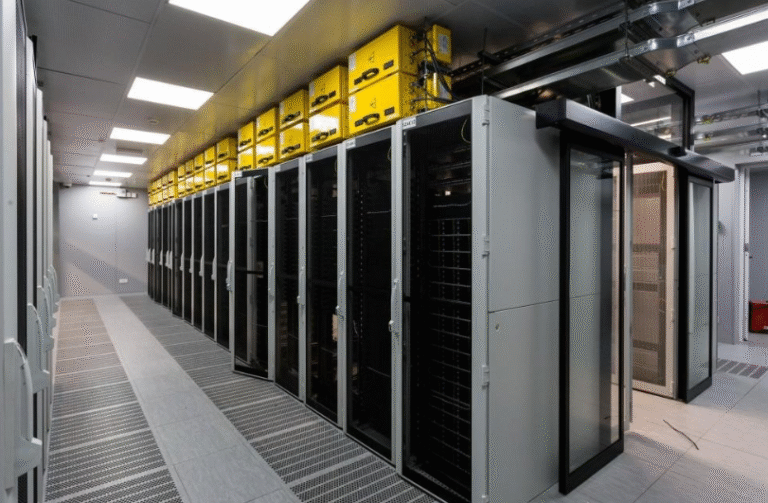
In today’s fast-paced digital world, businesses require data infrastructure that is not only scalable but also flexible, cost-effective, and easy to deploy. This is where the concept of a containerized data center comes into play. Unlike traditional data centers, which are often large, rigid, and costly to maintain, containerized data centers offer a modular approach, enabling organizations to meet growing computational demands efficiently.
What is a Containerized Data Center?
A containerized data center is a self-contained data center built within a shipping container or a modular enclosure. These containers house servers, storage systems, networking equipment, and cooling systems, all integrated into a compact and portable unit. Essentially, it is a fully functional data center that can be deployed almost anywhere, from remote locations to urban environments.
The concept leverages standard shipping containers to provide a standardized, transportable infrastructure solution. This allows businesses to deploy computing resources rapidly without the logistical challenges of constructing a traditional brick-and-mortar facility.
See also: Safari for Windows: Cross-Browser Compatibility Testing Techniques
Key Features of Containerized Data Centers
- Portability: The containerized design allows these data centers to be transported and installed quickly. They are ideal for temporary deployments or locations with limited space.
- Scalability: Organizations can scale their IT resources by adding multiple container units as needed, creating a flexible and expandable solution.
- Rapid Deployment: Unlike traditional data centers, which require months or years to construct, containerized data centers can be operational in weeks, significantly reducing setup time.
- Energy Efficiency: Advanced cooling systems and optimized server arrangements ensure reduced power consumption. Many containerized data centers are designed to operate efficiently in various environmental conditions.
- Cost-Effectiveness: The modular design reduces construction and operational costs. Companies avoid large upfront capital expenditures associated with traditional data centers.
- Security and Resilience: These units are built to withstand harsh conditions and provide physical security. Some containers are designed with fire suppression systems, redundant power supplies, and disaster recovery features.
Advantages of Containerized Data Centers
- Flexibility in Deployment: Perfect for organizations that need temporary or mobile IT infrastructure.
- Reduced Infrastructure Costs: Eliminates the need for constructing new buildings or extensive renovations.
- Faster Time-to-Market: Supports businesses requiring immediate access to computing power.
- Environmental Adaptability: Can operate in harsh climates or remote areas without extensive site preparation.
- Disaster Recovery: Offers an ideal solution for backup data centers or emergency IT setups.
Applications of Containerized Data Centers
- Edge Computing: Deploying compute resources closer to users or IoT devices for faster processing.
- Temporary Projects: Supporting events, research expeditions, or temporary business operations.
- Disaster Recovery: Quickly restoring IT services in case of natural disasters or system failures.
- Telecommunications: Supporting telecom infrastructure in remote or rural areas.
- Cloud Expansion: Serving as modular extensions for existing cloud environments.
Challenges and Considerations
While containerized data centers offer numerous benefits, there are a few challenges to consider:
- Limited Space: The compact design can restrict expansion within a single container.
- Cooling Constraints: High-density deployments may require specialized cooling solutions.
- Power Requirements: Adequate and stable power supply is crucial for continuous operation.
- Maintenance: Regular maintenance is essential to ensure optimal performance in confined environments.
FAQs About Containerized Data Centers
Q1: How long does it take to deploy a containerized data center?
A containerized data center can typically be deployed within weeks, compared to months or years for traditional data centers.
Q2: Are containerized data centers environmentally friendly?
Yes, they are often designed with energy-efficient cooling and power systems, minimizing environmental impact.
Q3: Can containerized data centers handle high-density computing?
Yes, modern designs support high-density servers and storage equipment, though cooling and power need careful planning.
Q4: Where can containerized data centers be used?
They can be deployed in urban areas, remote locations, disaster zones, edge computing sites, and temporary setups.
Q5: Are containerized data centers secure?
Yes, they offer physical security and can include features like fire suppression, redundant power, and access control.
Conclusion
The containerized data center represents a transformative approach to IT infrastructure, offering businesses a flexible, scalable, and cost-effective solution to meet evolving digital demands. With rapid deployment, energy efficiency, and portability, these modular units are ideal for organizations seeking agility and resilience in today’s competitive landscape. As technology advances, containerized data centers will continue to play a crucial role in redefining how businesses manage and deploy their computing resources.